Vinyl flooring in Sri Lanka isn't one single product. It covers thin roll vinyl, flexible glue-down tile, and rigid click-lock plank, and each is priced and built differently.
This article sets out what each format actually is, what it's made of, what it costs, how it's installed, how click-lock plank compares with standard vinyl and with tile, laminate and timber, and what to check before getting a quote.
Vinyl flooring starts as PVC (polyvinyl chloride) plastic blended with stabilizers, additives that keep it from degrading over time. In Sri Lanka, this base material is sold in three distinct formats:
Sheet vinyl flooring and vinyl flooring rolls: thin and flexible, bonded to the subfloor with adhesive across its full surface. This is what people mean by vinyl carpet flooring or vinyl floor carpet: older roll vinyl was laid and handled much like carpet, which is where the naming comes from.
Flexible glue-down LVT (luxury vinyl tile): individual tiles or planks, glued or peel-and-stick, thin enough to bend by hand. This is similar to sheet vinyl but sold as individual pieces rather than one continuous roll.
Rigid click-lock plank: a dense core sits under the printed design layer, topped with a wear layer (a clear protective coating that takes the scratching and scuffing so the pattern underneath doesn't). Stiff enough that it doesn't flex, and engineered to click together without glue or nails.
The dense core in rigid click-lock plank builds on that same PVC base: a stone-plastic composite core adds limestone powder, while a WPC (wood-plastic composite) core adds wood flour, which is what makes them denser and stiffer than standard vinyl.
Vinyl flooring, in any format, is built from four layers stacked on top of each other, not one solid material.
UV coating: the topmost layer, a clear coat that shields the floor from fading in direct sunlight and adds an extra layer of scratch and hygiene protection on top of the wear layer beneath it.
Wear layer: the clear, top-most coating that actually takes the foot traffic, scuffing and scratching. This is what protects the pattern underneath from wearing away, and a thicker wear layer generally means a floor that holds its look longer under heavy use.
Print or design layer: sits just under the wear layer and carries the wood-look or stone-look pattern. In many products, this layer is also textured to match the printed grain, so the surface feels like the material it's mimicking, not just showing a picture of it.
Core: gives the plank its structural stability. In standard vinyl, this is flexible PVC; in rigid click-lock planks, it's the dense stone-plastic or wood-plastic composite described above.
Backing or underlayment: the bottom layer, which can add cushioning, sound absorption, and a degree of insulation depending on the product.
Standard vinyl and click-lock plank differ in how they attach to the floor beneath them, and that one difference is what drives most of the other differences between them, underfoot feel, subfloor requirements, installation, and reparability.
Standard vinyl (sheet/LVT) | Click-lock plank (rigid core) | |
|---|---|---|
How it's laid | Bonded to the subfloor with adhesive | Floats; edges click together, no glue |
Underfoot feel | Softer | Firmer, more solid |
Subfloor tolerance | More forgiving of a slightly uneven base | Needs an even base |
Resistance to denting and impact | Lower | Higher |
Installation | Usually needs a professional for a full, even bond | Often DIY-manageable for a small room |
Service life and reparability | A damaged section generally can't be spot-repaired; it shows | Individual planks near a wall can often be lifted and swapped |
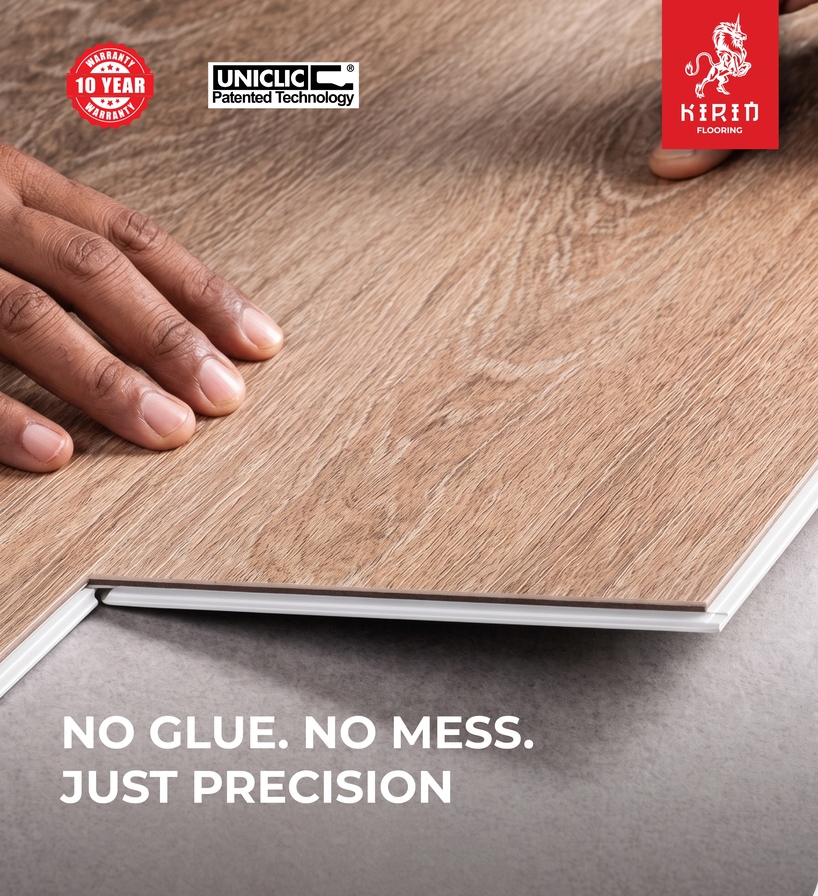
Click-lock plank generally floats over an existing sound, flat tile floor without demolition, because it doesn't need to bond to the subfloor. Standard vinyl needs a clean, properly prepared surface for the adhesive to bond to, but because it's thin and flexible, it can handle minor unevenness in that surface without the joint stress a rigid click-lock floor faces on the same base.
Vinyl flooring goes down one of four ways, and which one applies depends on the format bought, not personal preference.
Interlocking (click-lock): planks lock together edge to edge through the milled joint described above. No adhesive, and the floor floats free of the subfloor.
Glue-down: a full adhesive bond across the back of a sheet or tile, used for standard vinyl and some flexible LVT. This is the method most likely to need a professional, since an uneven bond shows through the surface.
Loose lay: tiles or planks placed on the subfloor with no adhesive and no locking system. The backing's own weight and grip hold it in place, which makes it less secure under heavy furniture or high traffic than either glue-down or click-lock.
Peel and stick: the same idea as glue-down, but the adhesive is already applied to the backing at the factory. The installer peels a liner and presses the piece into place.
Whichever method is used, direct, sustained sunlight is worth planning around: heat can cause a vinyl floor to bubble or lift at the edges over time, so a sunroom or a room with a large uncovered west-facing window needs that factored into where the floor is laid and whether it's shaded.
Standard sheet and glue-down vinyl flooring in Sri Lanka sits at the cheaper end of the market, particularly the thinner 1.5–3mm material commonly sold locally. Prices vary by thickness, finish and whether the quote includes labour and glue.
Rigid click-lock plank is where the extra value sits. Its denser core resists denting and impact better, so the floor holds its look for longer. Its joint floats over an existing floor, so there is none of the demolition that standard vinyl’s full adhesive bond requires.
What moves the rate within either category: the format, the core material, the wear-layer quality, and whether the quote covers material only or material plus fitting.
Standard sheet vinyl suits a tight budget, a rental or a low-traffic room. Click-lock plank earns its place in busy family rooms and in renovations where lifting the old floor isn’t practical.
An accurate per-sq-ft figure for either type still depends on the room and the finish chosen.
A complete flooring quote states four things beyond the per-sq-ft price: whether it includes removing the old floor, whether it includes underlayment or a moisture barrier where needed, what the wear-layer warranty actually covers, and the installation timeline.
Removal of the old floor: demolition and disposal cost extra if the quote doesn't already include it.
Underlayment or moisture barrier: relevant mainly for a concrete subfloor; some quotes bundle it, some charge separately.
Warranty coverage: what's actually covered, wear-layer defects for example, versus what isn't, such as damage from standing water or improper installation.
Timeline: how many days the room is out of use, including any drying or curing time.
A quote missing one of these for vinyl flooring in Sri Lanka isn't necessarily bad, but it isn't directly comparable to one that includes them.
Tile, laminate, and timber are the other materials most homeowners weigh against vinyl flooring in Sri Lanka when re-flooring a room.
Vinyl (standard/click-lock) | Tile | Laminate | Timber | |
|---|---|---|---|---|
Price band | Low to mid | Mid to high, plus install labour | Low to mid | High |
Water/moisture tolerance | Good, with a sealed seam or joint | Very good | Poor at joints if water sits | Poor, swells and warps |
Installation | Bonded or floating, no wet trades | Wet trade, takes longer | Floating, similar to click-lock plank | Skilled trade, slower |
Maintenance | Sweep and damp-mop | Sweep and mop; grout needs cleaning | Sweep and damp-mop | Periodic sealing or refinishing |
Underfoot feel | Warmer than tile | Cold, hard | Similar to vinyl | Warm, can flex slightly |
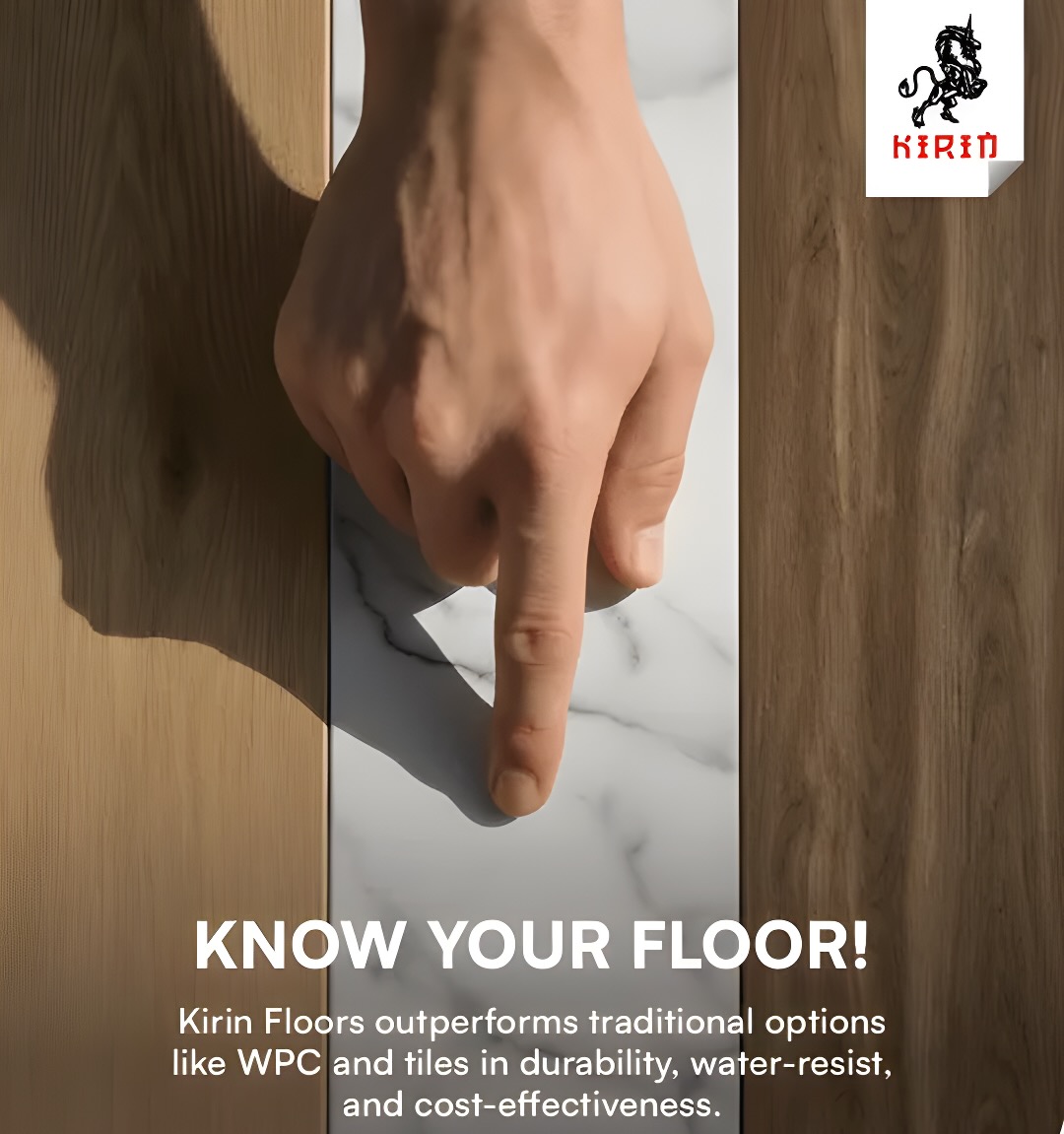
Kirin Flooring makes Kirin SPC flooring, a rigid click-lock plank built on the patented Uniclic system, in wood-look and stone-look designs. It’s also the only Sri Lankan-manufactured flooring certified to FloorScore and Assure, which test for low chemical emissions and for the quality and performance of rigid core flooring. The floor going into a family room has been checked for what it releases into the air as well as how it wears.
The SPC core is dense and rigid rather than soft and flexible, so it resists the dents and scuffs that wear down standard vinyl, and it holds its shape and look for longer. Because the planks lock to each other instead of bonding to the floor, about 99% of Kirin’s installs go straight over an existing floor. There’s no glue, no demolition, no dust, and no days without a usable room while the old floor is torn out. For a renovation, that means a longer-lasting floor with far less disruption to the house.
Standard vinyl and click-lock plank land on opposite ends of most of the trade-offs covered above: standard vinyl costs less but needs a fully bonded, well-prepped surface, while click-lock plank costs more but resists dents better and floats straight over an existing tile floor without tearing it out first.
That construction is why click-lock SPC flooring is the better option for most rooms: the dense core resists the dents and scuffs that wear down standard vinyl over time, the planks go in without demolition or downtime, and it still comes in below the cost of good-quality tile. Kirin flooring makes that option, in a range built for exactly this kind of room.
Let's talk about pricing it for your room.
No. Vinyl flooring, standard or click-lock, is moisture-resistant, not waterproof. Water resistance depends on how well the seams or joints are sealed, not on the material itself being impervious. Some vinyl flooring sold locally is marketed as unqualified "100% waterproof," which overstates what the category actually guarantees.
Most vinyl flooring on the market, standard or click-lock, is sold in one of a few broad look categories: wood-look, stone-look, and less commonly a marble or ceramic-tile look. Within wood-look designs specifically, warmer tones and cooler, more contemporary tones both show up regularly in what's available locally, giving a homeowner room to match either a traditional or a more architectural interior.
Moisture-resistant construction handles everyday splashes and humidity well. Standing water or a genuinely wet zone, a shower recess, for example, is a different situation, and it's worth confirming suitability directly with the supplier before flooring it that way.
There's no fixed number: it depends on the wear-layer quality and how much traffic the room gets. A thicker wear layer on a rigid click-lock plank generally outlasts a thin sheet vinyl in a high-traffic room; either can last many years in a low-traffic one.
Click-lock plank like Kirin SPC flooring is often manageable for a competent DIYer in a single small room, since it floats and clicks together with no adhesive. Standard vinyl's full adhesive bond is harder to get right without experience, so it usually needs a professional installer.
Sweep or vacuum regularly to keep grit from scratching the surface, and damp-mop rather than soaking it. Avoid steam mops, since sustained heat and moisture can affect the adhesive or the joints over time. Neither format needs sealing or refinishing.
Yes, over time, like most printed flooring materials. A UV-protective wear layer slows this down but doesn't stop it entirely. Rooms with a lot of direct sun exposure show more fading over the years than shaded rooms.
No. Laminate uses a fiberboard core that swells if water sits on a joint for long. Vinyl flooring, in either the standard or rigid click-lock construction, uses a PVC or polymer-composite core that doesn't absorb water the same way.
Mainly the shape. Vinyl plank is cut long and narrow to mimic wood flooring; vinyl tile is cut square or rectangular to mimic stone or ceramic. Both can be made in standard flexible or rigid click-lock construction, so the plank-versus-tile choice is about the look, not the underlying build.
An acrylic-based, pressure-sensitive adhesive is the standard choice for glue-down vinyl, since it holds up under temperature swings and doesn't loosen in humid conditions the way some other adhesives can.
Generally, yes, provided the existing floor is intact, clean, and not lifting or damaged. A failing or uneven old vinyl floor needs to come up first, since neither a glue-down bond nor a floating click-lock floor will sit well on a compromised surface underneath.